Re-imagining a cult yoga brand's digital platforms for an omnichannel fitness future.
Role
Responsible for end-to-end product strategy & design
Time Period
2021-23
Surfaces
Web, iOS
Scope
UX Research
Interaction Design
Visual Design
Design Systems
Content Design / UX Writing
Information Architecture
Collaborators
1 UX Designer
1 Visual Designer
1 Product Owner
1 Tech Lead + 4 SWEs
1 Set Designer
1 Content Programming Lead
Impact
+30% Subscriber Satisfaction
3x User Engagement (WAUs)
+8pp Free-to-Paid Conversion
-40% D30+ Churn Rate
To comply with any non-disclosure agreements, I have omitted, sanitized, and/or obfuscated confidential information in this case study. All information and opinions are my own and do not necessarily reflect the views of Y7 STUDIO or FitLab.
Discovery
Context & Design Challenge
By the late 2010s, meditation was everywhere. Headspace and Calm turned it into a billion-dollar category, packaging mindfulness as approachable and secular. Millions downloaded, but few stuck with it (myself included). The static audio sessions felt useful for a week, then quickly lost value.
Meanwhile, meditation studios were opening in major cities, borrowing the boutique fitness playbook that made SoulCycle a cultural phenomenon. In contrast to the apps, they promised community, live guidance, and sensory escape from city chaos. But most leaned hard into a “Goop-coded” aesthetic of crystals and incense. Walking into one, I immediately felt out of place. They appealed to the wellness-inclined, not the high-performers battling burnout in glass towers—the people who arguably needed mindfulness most.
I recognized a gap in the market: a modern brick-and-mortar meditation experience designed with the needs of the stressed-out urban professional in mind. An experience that felt as restorative as a spa, as credible as therapy, and as habit-forming as boutique fitness. Something approachable but substantive, sensory but secular. After securing capital for a Toronto pilot location, I set out to solve this design challenge and prove out a model that could expand across North America.
Target Persona
Who they are
Time-poor, high-performing professionals in their late 20s to early 40s— consultants, lawyers, bankers, and tech leads. They earn $125-200k, but their demanding roles leave them burnt out at higher rates than any other income group. Living in dense urban cores, they’re already fluent in the boutique fitness model, accustomed to paying $30+ for classes that deliver.
Aspirations
- Build sustainable habits to manage stress and avoid burnout
- Improve focus and attention in a world of constant distractions
- Release tension and recharge after cognitively exhausting workdays
- Align wellness practices with their high-performance identity
- Invest in tangible experiences that feel credible and premium
Their mindset
Ambitious, overstressed, and constantly context-switching. They see themselves as rational and pragmatic, not spiritual seekers—chanting and crystals feel foreign and alienating. For them, meditation has to function as a tool for performance in work and life. They gravitate toward modern, high-end environments where design signals credibility and status.
Pain points
- Apps feel one-dimensional, solitary, and easy to abandon
- Self-conscious in environments that don’t match their identity
- Habits don't stick without external structure or accountability
- Skepticism runs deep, and anything "woo-woo" kills trust
- Can justify $30+ fitness classes, but meditation is a harder sell
Design Challenges
User research made the trade-offs clear: Vimeo’s off-the-shelf solution couldn’t scale to our needs. Core problems in content discoverability, hit music integration, and seamless omnichannel account management went unaddressed.
This led to our core design challenge: how do we design an SVOD product that could serve both studio clients and at-home yogis, while positioning Y7 for long-term digital growth?
Success Criteria
SVOD Findability and Discoverability
Users should be able to surface relevant, long-tail content quickly.
Measured by the browse-to-play rate, avg. time-to-play, and the catalog utilization rate.
SVOD Subscriber Engagement & Retention
Users should be able to surface relevant, long-tail content quickly.
Measured by the browse-to-play rate, avg. time-to-play, and the catalog utilization rate.
SVOD Acquisition, Activation & Conversion
Users should be able to surface relevant, long-tail content quickly.
Measured by the browse-to-play rate, avg. time-to-play, and the catalog utilization rate.
Ease of Studio Reservation
Users should be able to surface relevant, long-tail content quickly.
Measured by the browse-to-play rate, avg. time-to-play, and the catalog utilization rate.
Guiding Principles
SVOD Findability and Discoverability
Users should be able to surface relevant, long-tail content quickly.
Measured by the browse-to-play rate, avg. time-to-play, and the catalog utilization rate.
SVOD Subscriber Engagement & Retention
Users should be able to surface relevant, long-tail content quickly.
Measured by the browse-to-play rate, avg. time-to-play, and the catalog utilization rate.
SVOD Acquisition, Activation & Conversion
Users should be able to surface relevant, long-tail content quickly.
Measured by the browse-to-play rate, avg. time-to-play, and the catalog utilization rate.
Ease of Studio Reservation
Users should be able to surface relevant, long-tail content quickly.
Measured by the browse-to-play rate, avg. time-to-play, and the catalog utilization rate.
Brand Identity Design
tl;dr: I set out to design a tailored UX with discoverability top-of-mind. The result: a playful, brand-forward browse UX that allowed users to rapidly find their perfect class, cutting average time-to-play in half while increasing catalog utilization.
Name
In the early concept phase, I explored the working title ANIMA—Latin for “breath” or “life force.” It neatly tied to meditation while rooting the brand in Western philosophy rather than Eastern spirituality. On paper, I felt it worked. In practice, it didn't: user interviews revealed people kept hearing enema. Not exactly the association you want.
That feedback steered me toward something clearer and more credible. I landed on MINDSET: familiar to professionals, versatile, and suggests a subtle double meaning ("reset your mind"). To give it edge, I appended “brain gym”—sharper than "meditation studio," more memorable than "mental fitness," and distinct enough to spark curiosity.
Visual Identity & Logomark
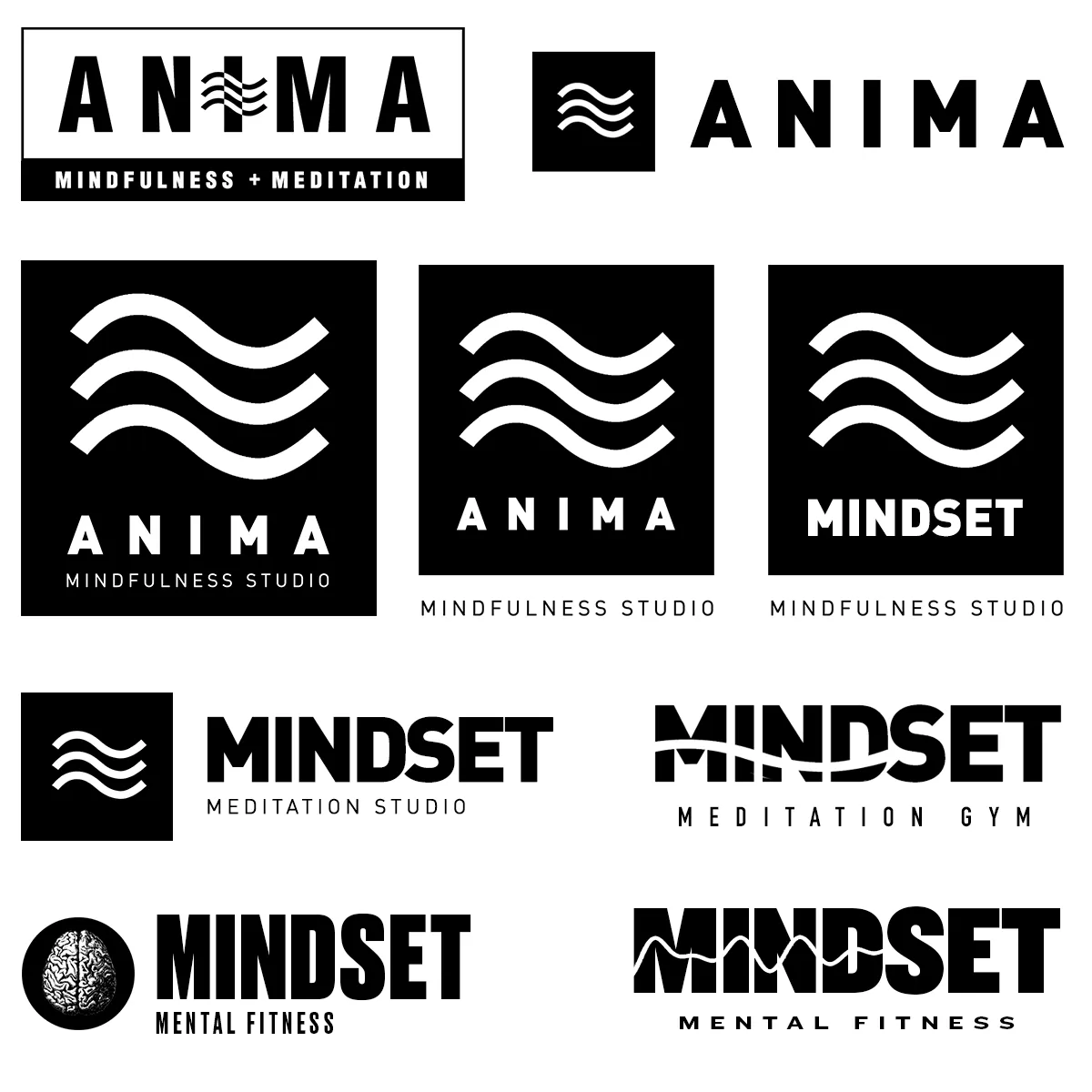
From the outset, I wanted waves in the identity. Early sketches used them as a visual metaphor for the breath, tying to the Latin definition of "anima." As the concept matured, the waves shifted to reference EEG patterns, tying directly to the brain-sensing tech in some classes and grounding our identity in science and tangibility.
For typography, I landed on the Source Sans family for its neutrality and modern clarity. Set in bold, all-caps, it projected weight and authority—steering clear of the soft, ethereal tropes common in wellness branding without over-indexing on masculine fitness-coded.
Experience Design
tl;dr: The goal was to make booking a studio class feel more intuitive, less frustrating and dramatically reduce time-to-reservation. The result: a single, intuitive modal-driven flow that was fast and frictionless for users, with stronger commercial outcomes for the business through dynamic logic.
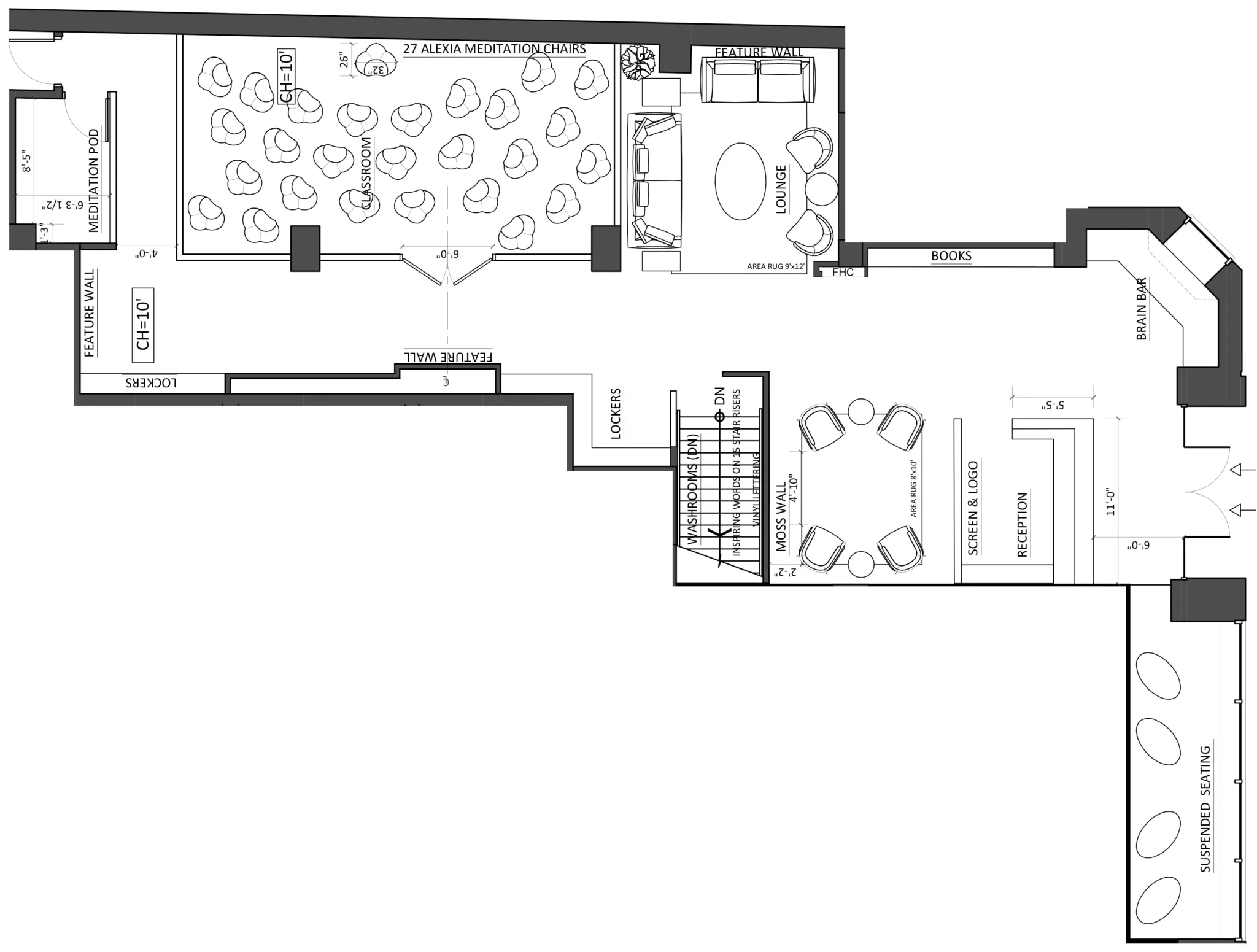
Pilot Location & Layout
For our pilot, I chose Toronto’s upscale Yorkville neighborhood—a dense hub of high-earning professionals, and close to offices and transit. It was the ideal setting to test product–market fit with our target persona: time-poor, skeptical, and status-conscious.
The 2,500 sq. ft. studio was designed with two complementary zones: living spaces and the meditation room. Allocating generous square footage to the former signaled hospitality over fitness efficiency, while a 25-seat meditation room struck the balance we wanted: intimate enough to feel personal, but busy enough to telegraph legitimacy and social proof.
Living Spaces
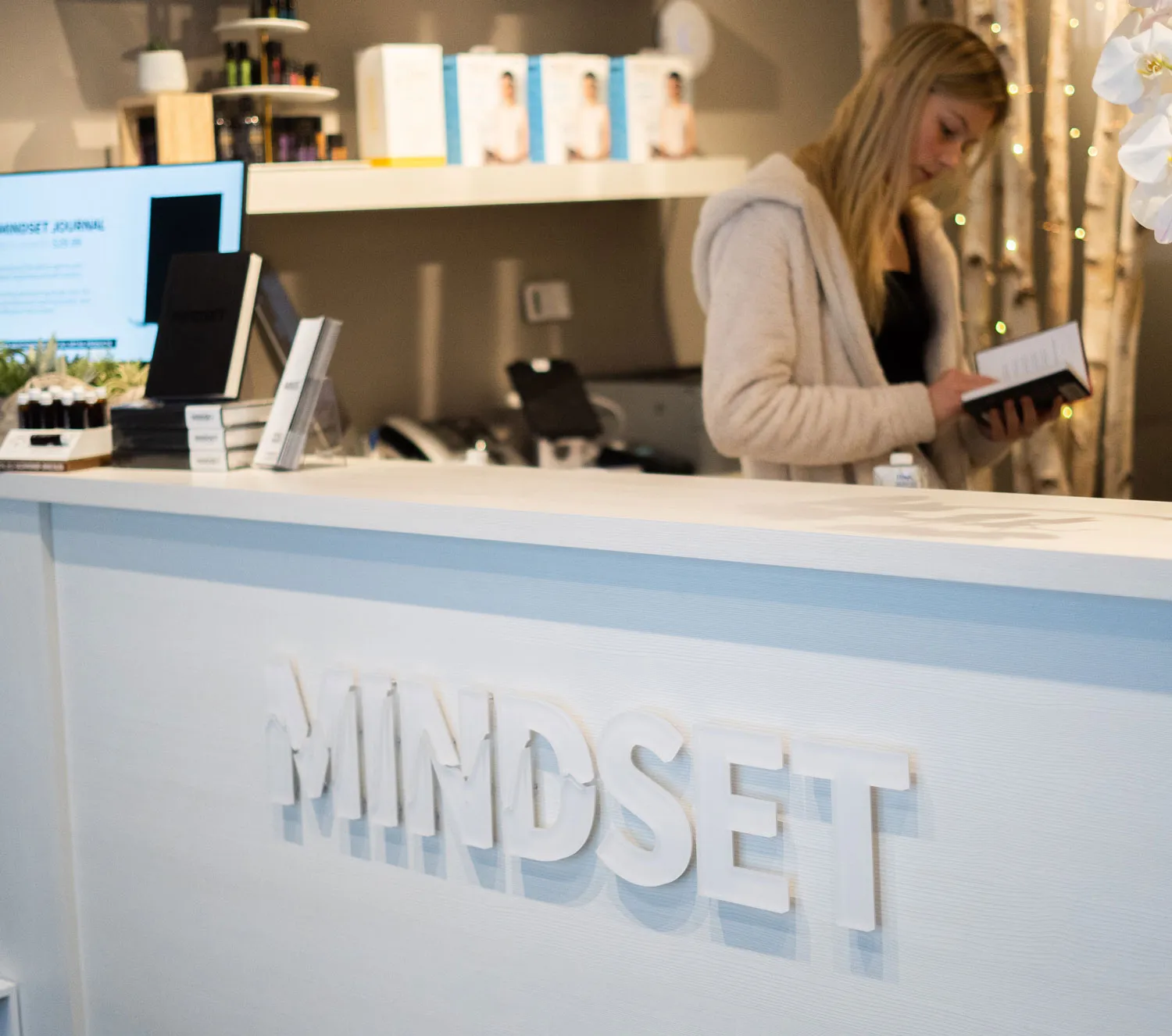
The “front of house” was designed as a home away from home—not a waiting room to be rushed through. We wanted guests to feel welcome arriving early and lingering late to unwind.
A neutral, warm palette with wood, woven straw, preserved moss, and greenery softened the environment. Soft lo-fi beats and a custom signature scent created a consistent sensory backdrop. Together, these details reinforced the approachability our persona craved: calming, modern, and contemporary without feeling clinical or mystical.
To support the business model without breaking that calm, we wove in subtle touchpoints: table toppers throughout the space highlighted memberships, guest passes, and seasonal offers in a low-pressure way—ambient reminders that blended into the environment rather than interrupting it.
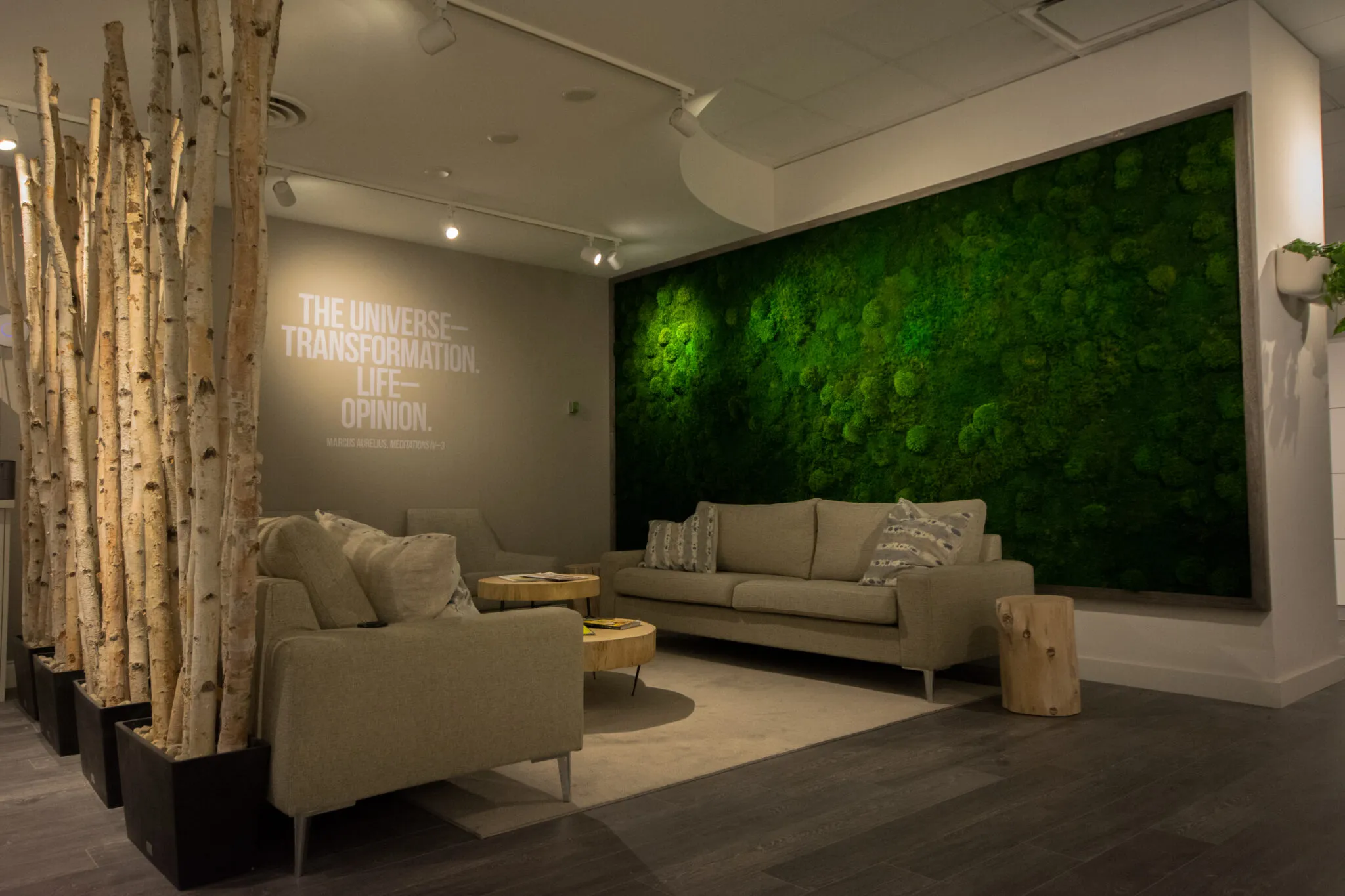
Spa Inc. Magazine wrote, "stepping into this extraordinary space, the noise and frenetic pace of downtown Toronto simply falls away."
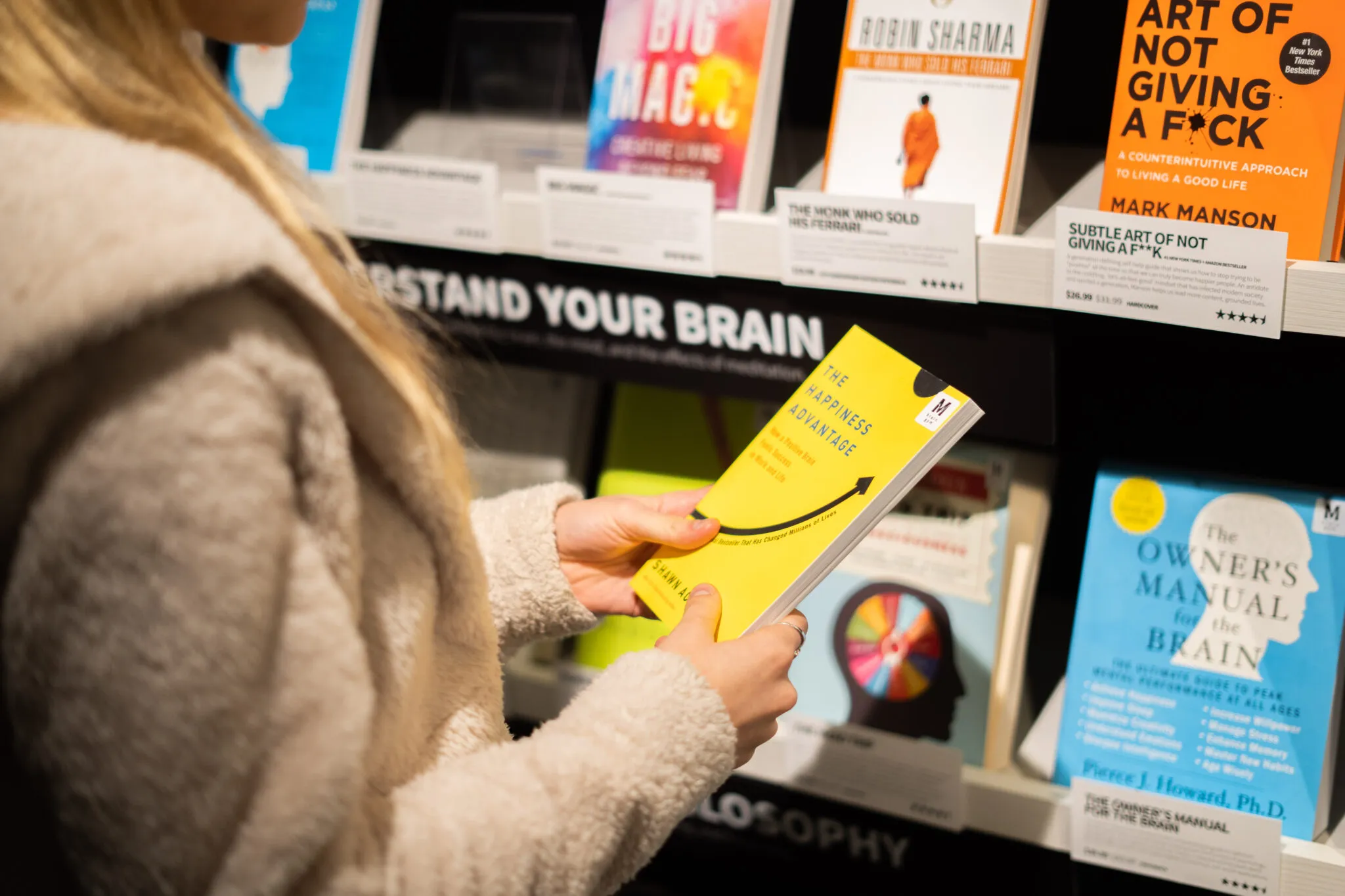
A curated personal development library in place of retail merchandise. This doubled as a non-fiction bookstore, visible from the street, showcasing titles that would resonate with ambitious professionals already exploring self-improvement.
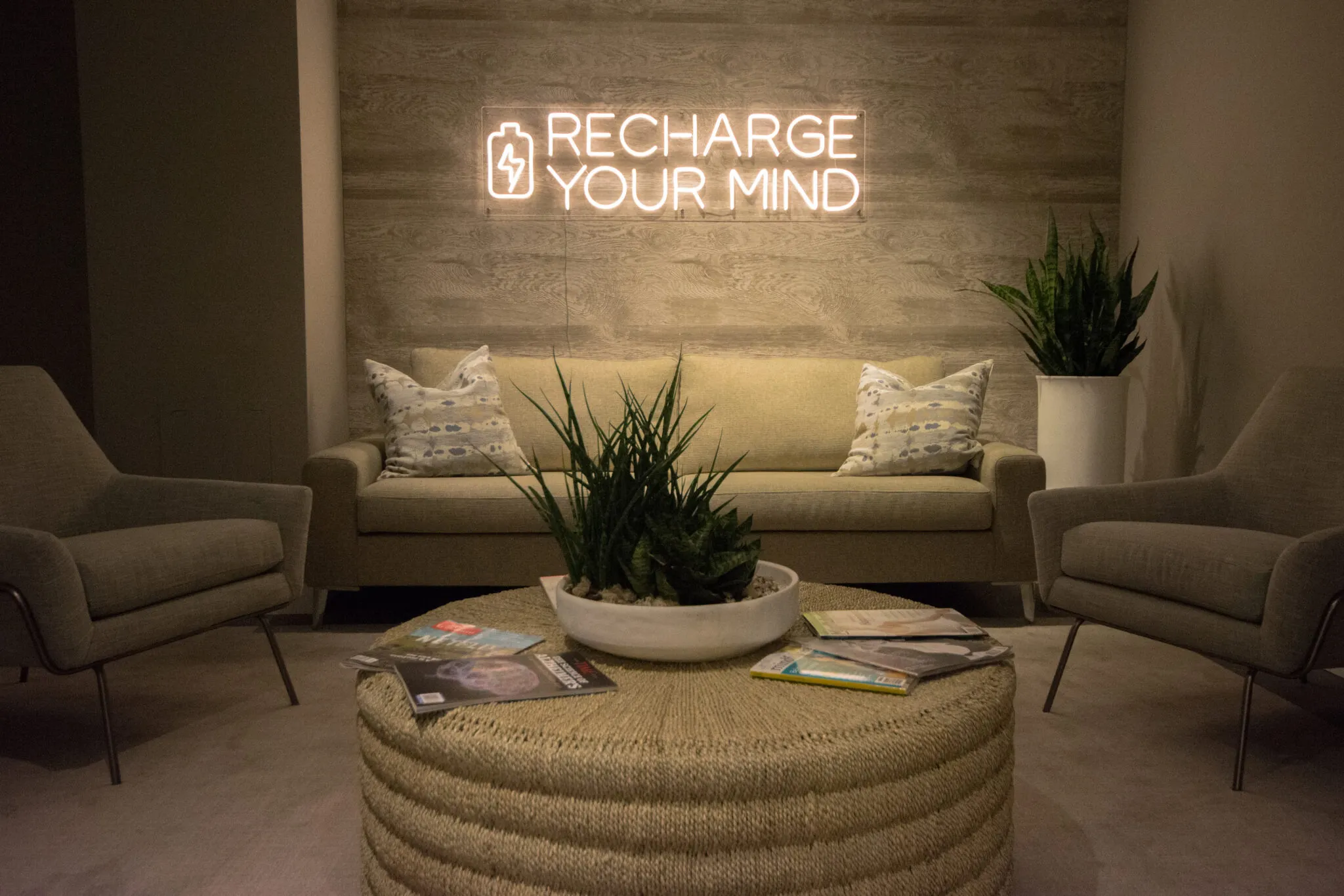
A custom neon sign framed above a lounge couch, designed as a viral Instagram moment to turn guests into informal brand advocates.
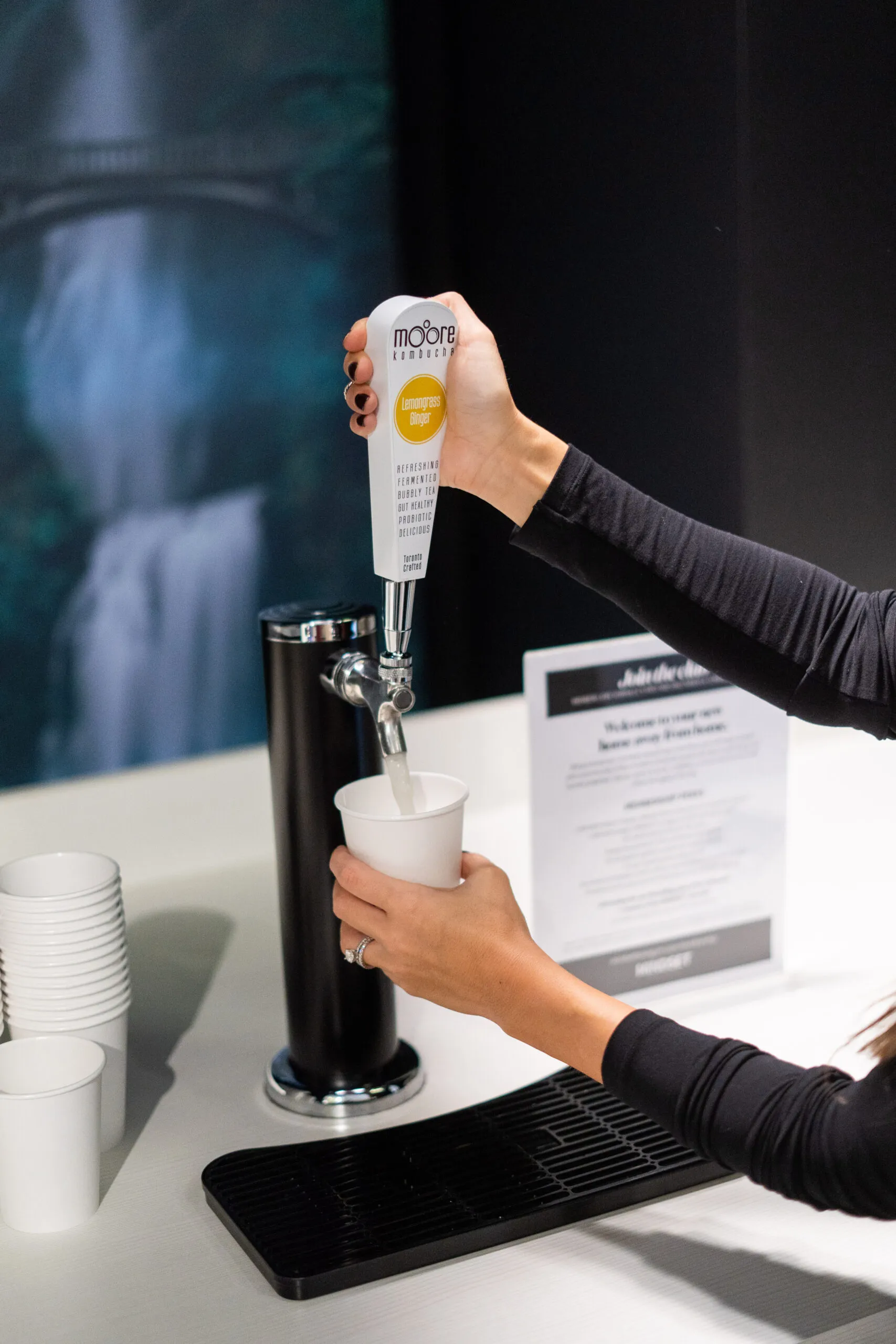
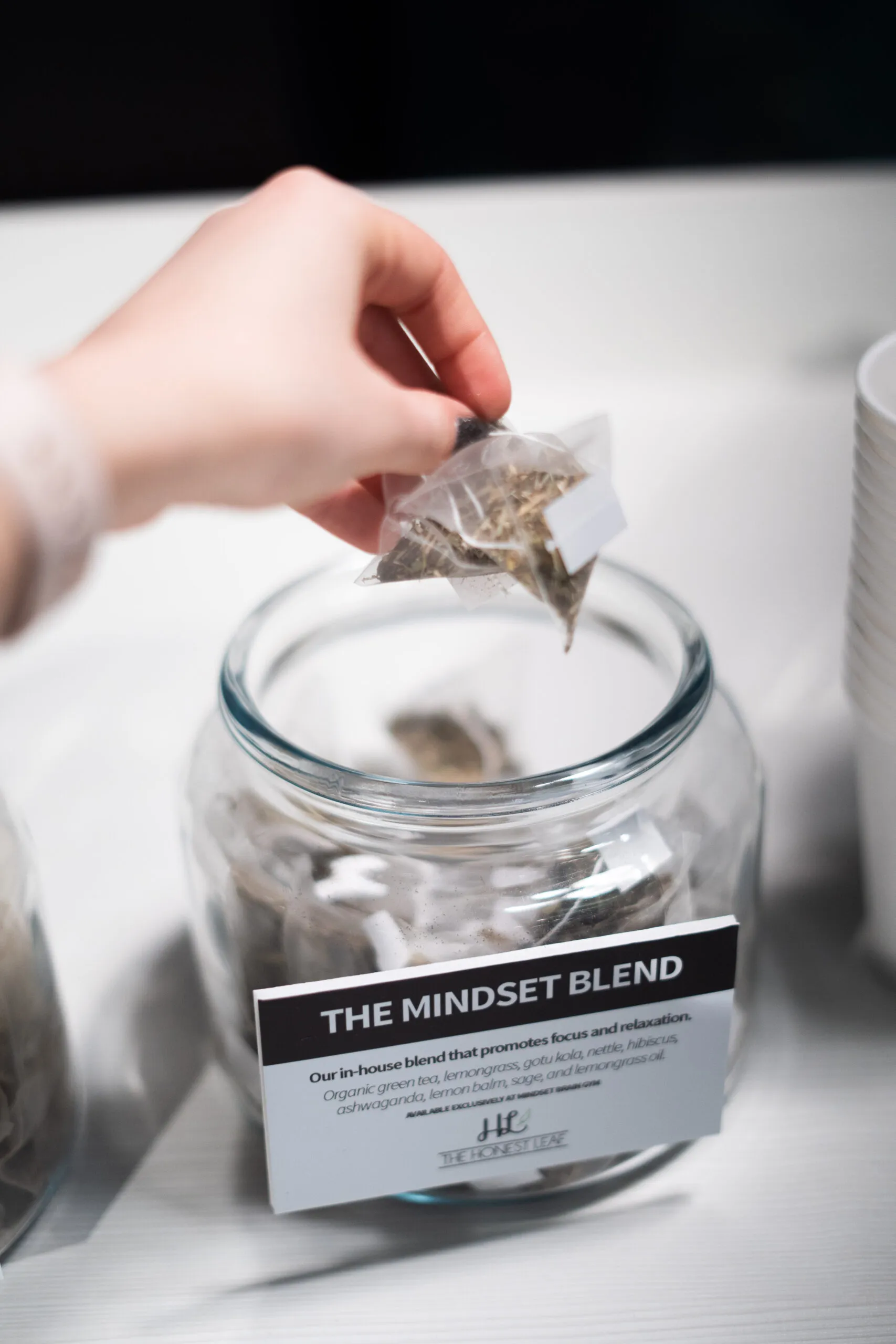
A "Brain Bar" at reception, serving complimentary tea (custom-blended for focus and calm with a local partner) and kombucha on tap — subtle signals of generosity and premium hospitality.
Multi-Sensory Meditation Room
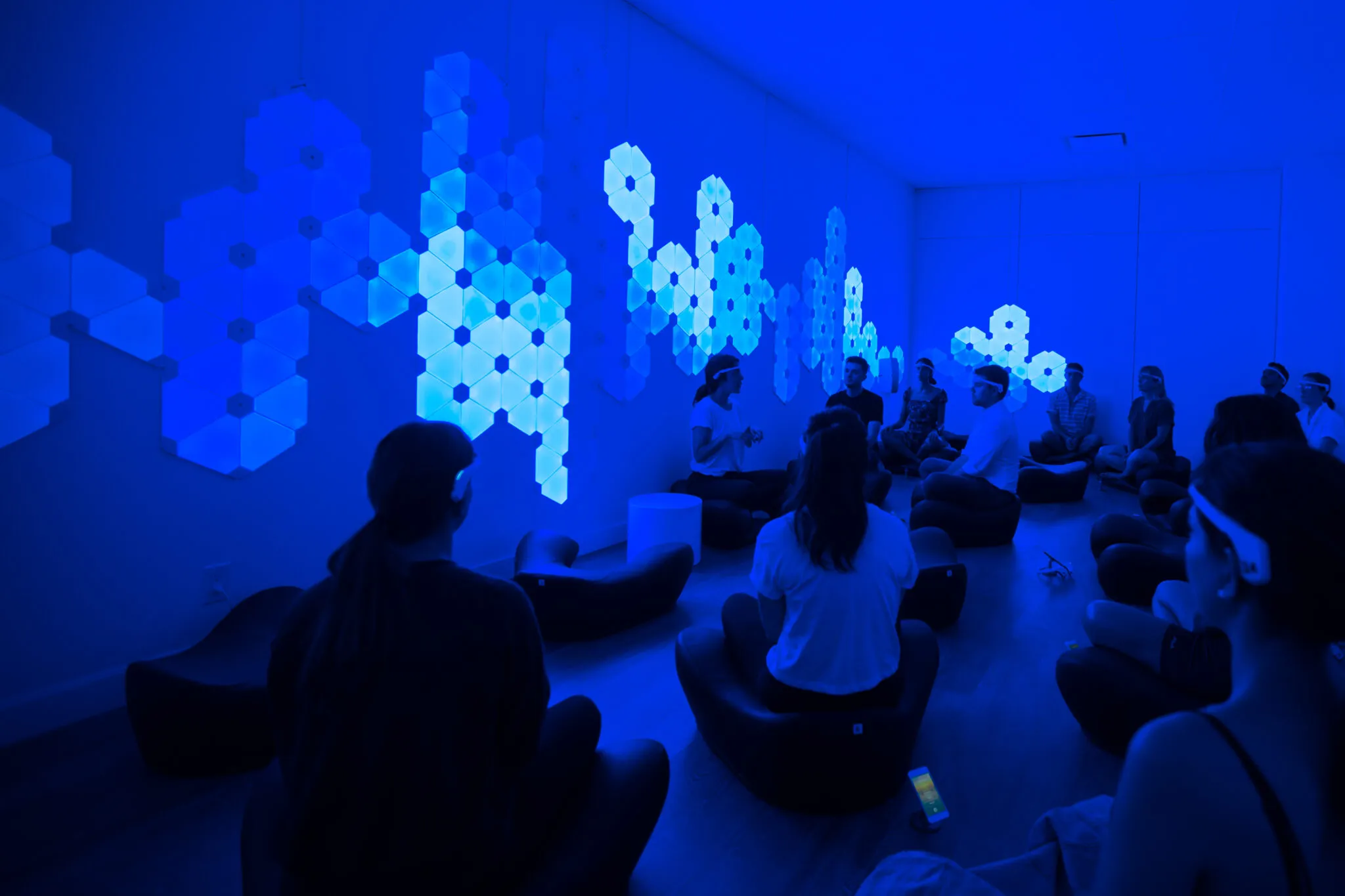
Where the living spaces were grounded and natural, the meditation room was deliberately ethereal and modern. Crossing into the room was meant to feel like crossing into a different state of mind—immersive, otherworldly, and unmistakably premium.
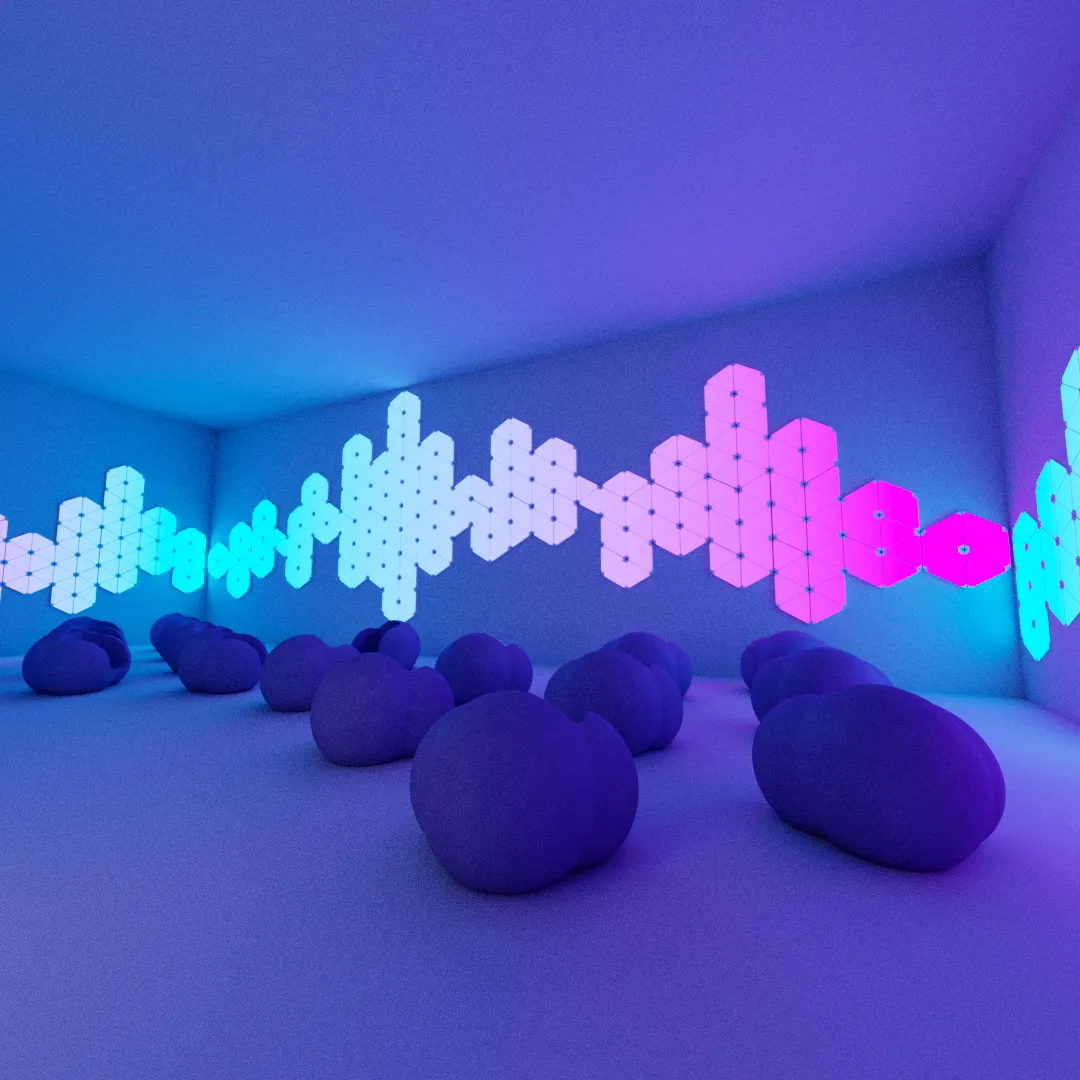
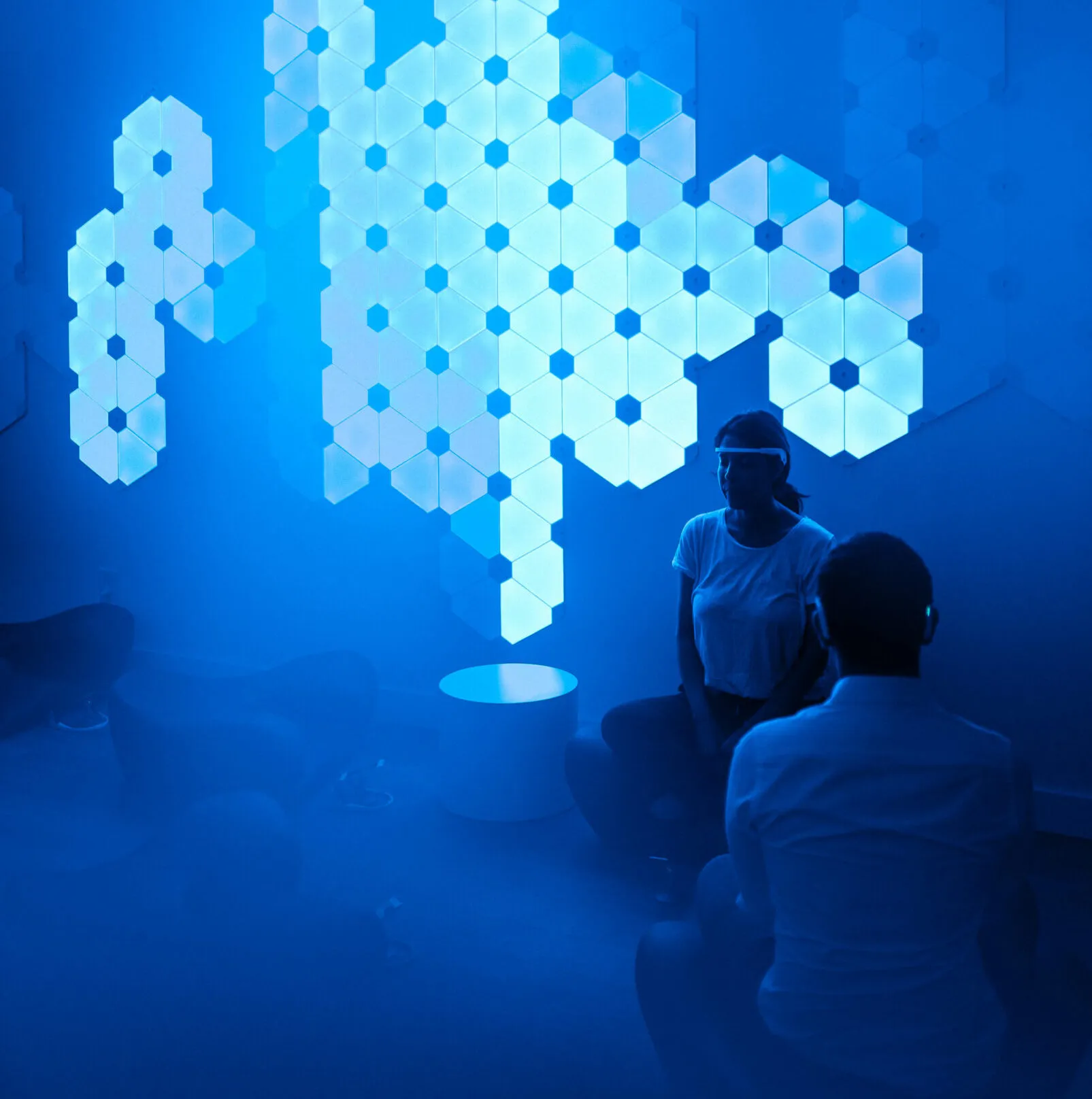
Hundreds of LED panels washed the room in dynamic waves of blue, synchronized with curated musical journeys. Signature essential oil blends were developed and diffused for each class type: calming scents for stress, energizing for focus. Ergonomic modular seating supported long sessions while allowing staff to reconfigure the room (ensuring it never felt empty, even on slower days).
This deliberate sensory layering—sight, sound, smell, touch—delivered what apps could not: a visceral experience that justified a premium price point and built trust through tangible design.
Teacher Hiring & Training
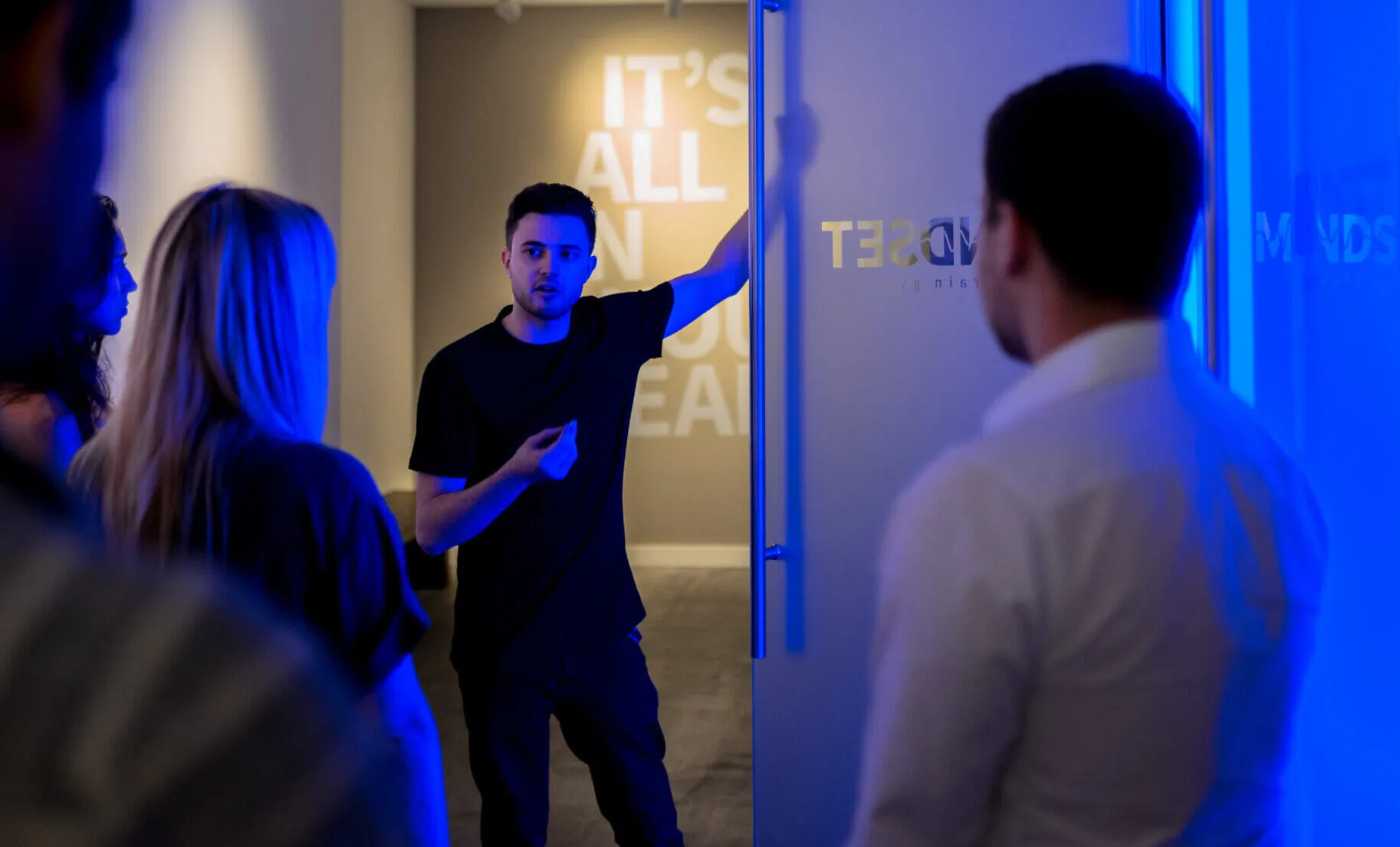
Teachers were our most important touchpoint. More than the lights or scents, they embodied the credibility and warmth that made the brand feel human. We vetted instructors against three pillars: approachability, authenticity, and academic grounding. Many came from corporate or fitness backgrounds, ensuring they could speak the language of our persona without slipping into mysticism.
A smaller roster with higher teaching frequency created consistency: members could build familiarity with “their” teachers, while we maintained quality control and exclusivity. Training emphasized evidence-based language and the importance of making first-timers feel at ease—upholding our principle of being welcoming to beginners, credible to the committed.
Fostering Experience "Stickiness"
Our biggest challenge was creating the equivalent of the “sweat factor” that made fitness classes addictive. Apps failed because results felt abstract; our persona needed something tangible, immediate, and repeatable.
We first partnered with Muse EEG headbands to offer a data-driven “Focus” class that tracked how often minds wandered. It drew press attention and curiosity, but the metrics backfired. Clients often left feeling frustrated or discouraged by initial low scores, or simply bought a headset for home use. Awareness was high, but we immediately saw clear struggles with long-term retention: a cohort analysis uncovered that we were failing to attract over three visits from 95%+ of new clients.
This failure taught an important lesson: tangibility alone doesn’t drive stickiness. Our clients didn’t want a slow-burn vitamin like “focus training,” they needed a painkiller. They craved an embodied release they could feel the moment they stood up.
We pivoted to breathwork, an intense but accessible practice layered with immersive music. Unlike meditation, it delivered an undeniable physical shift and let clients feel competent from day one. Two formats emerged: an energizing "HIIT for the mind," and a cathartic emotional release.
The results were immediate: both formats consistently sold out peak slots, boosted memberships, and built community rituals. Weekly live sound baths reinforced the same insight that people would pay a premium for—and return to—sensory experiences they couldn’t get from an app or at home. This evolution was a direct response to our persona’s pain points. They didn’t want metrics to track over time—they needed to walk out the door feeling transformed.
Service Design
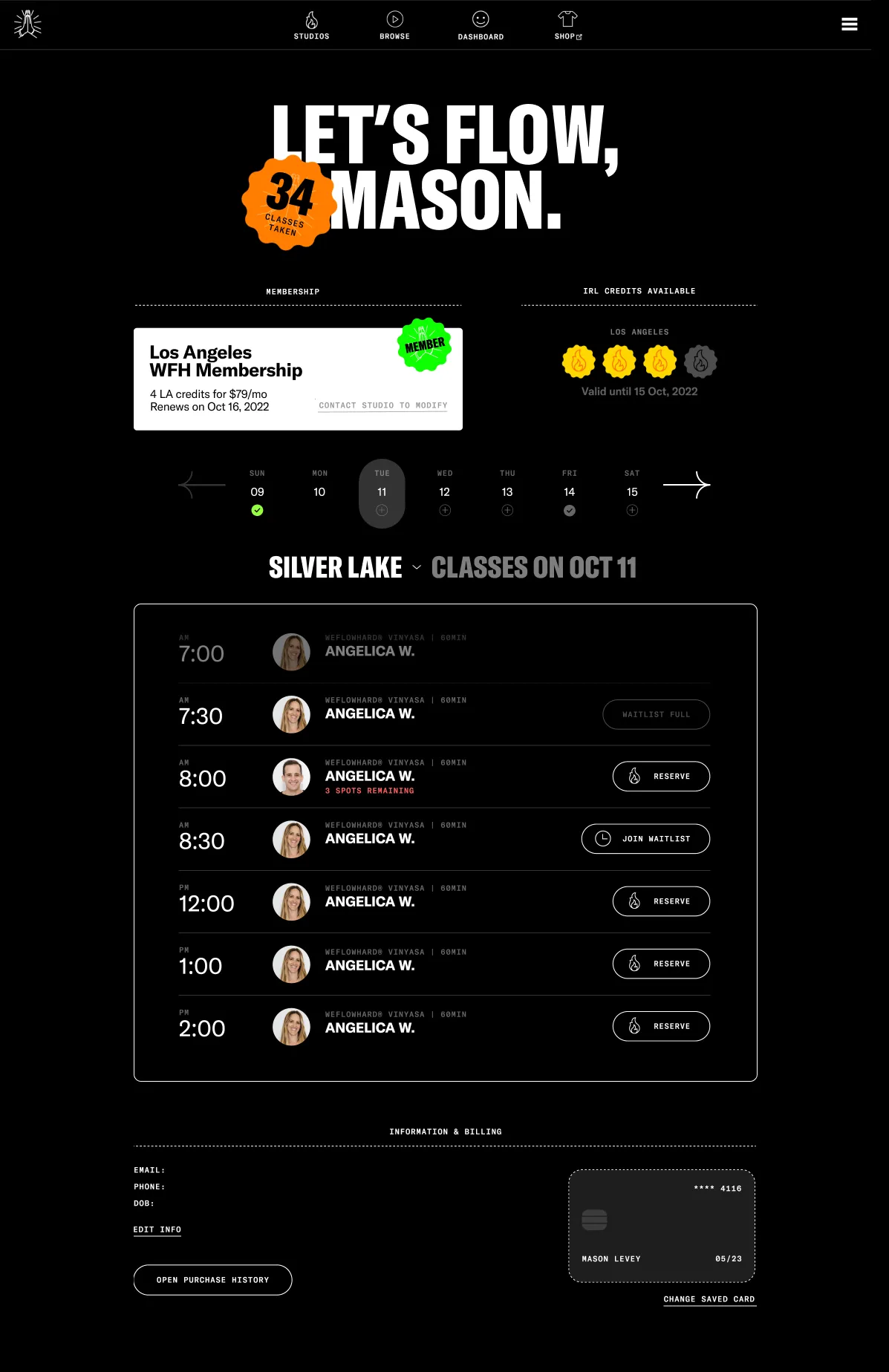
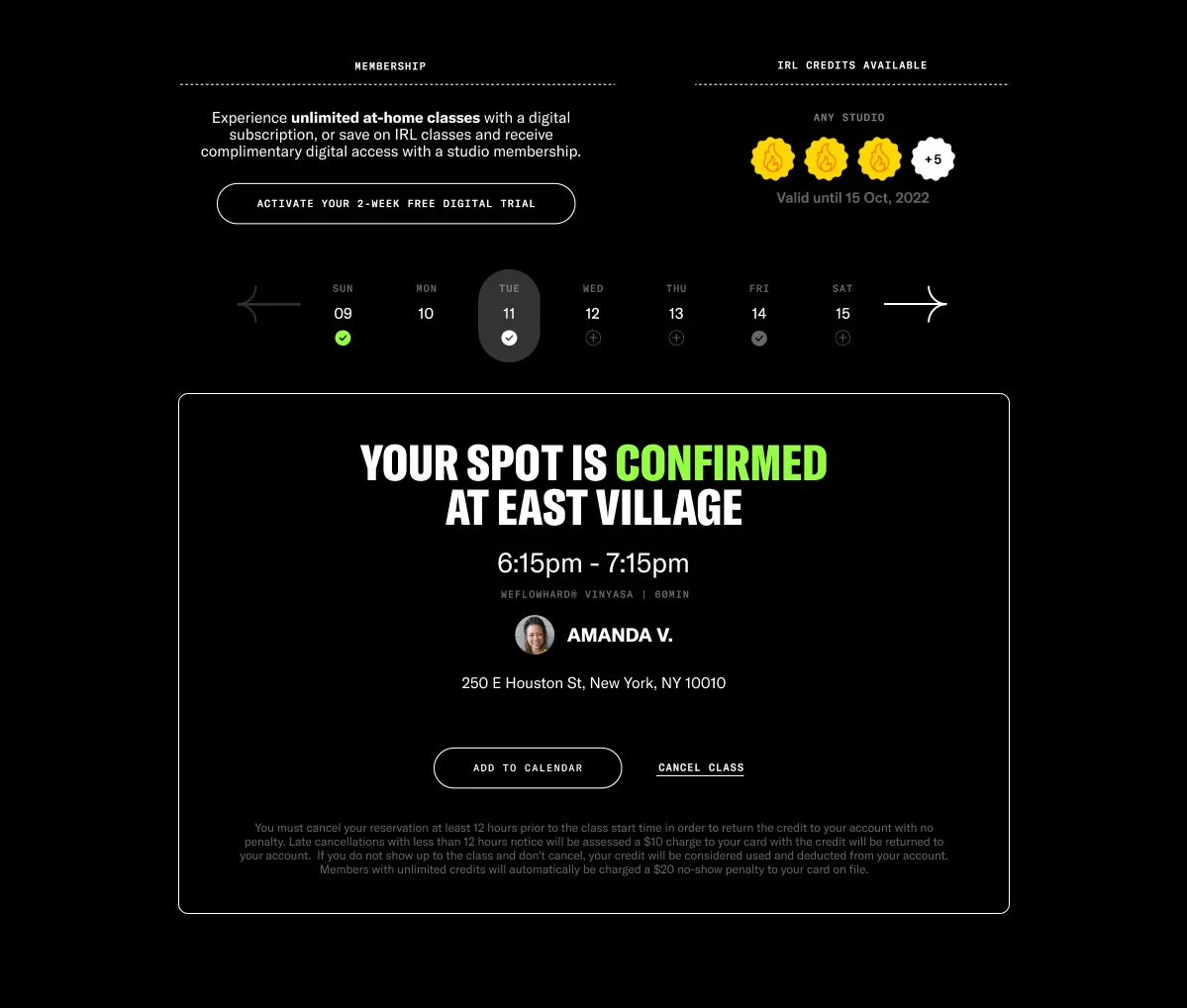
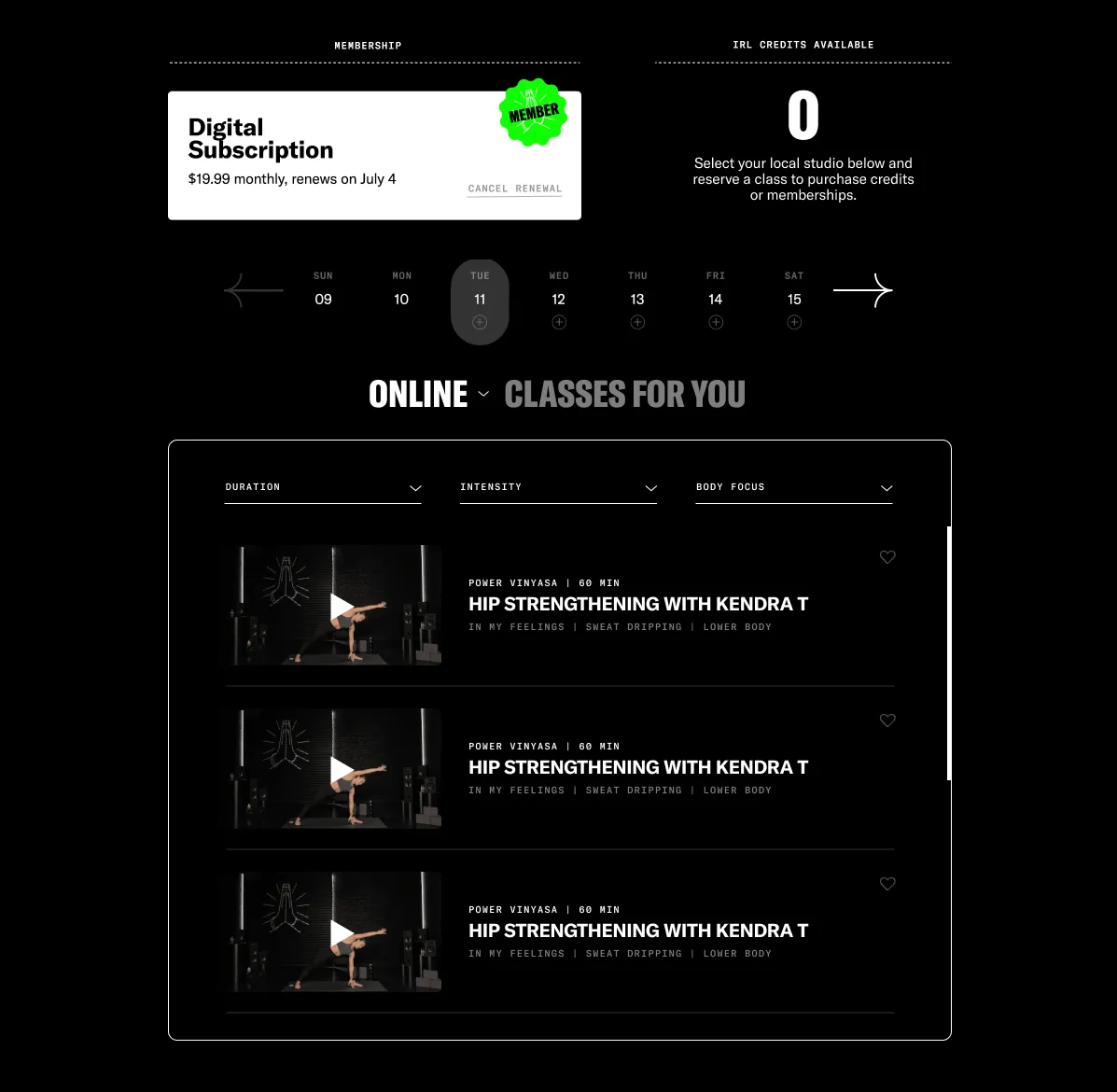
tl;dr: Mirroring the same frustrations in reserving a class, it was also a tedious process for clients to view, change, or cancel their upcoming class reservations. I designed a dashboard where clients could quickly manage upcoming reservations and their studio membership/SVOD subscription. To reduce friction further, this dashboard also served as a hub to rapidly reserve a studio class or start a class in under three clicks. To gamify the experience, they'd be also able to see how many total classes they've taken with the brand (both IRL and at-home).
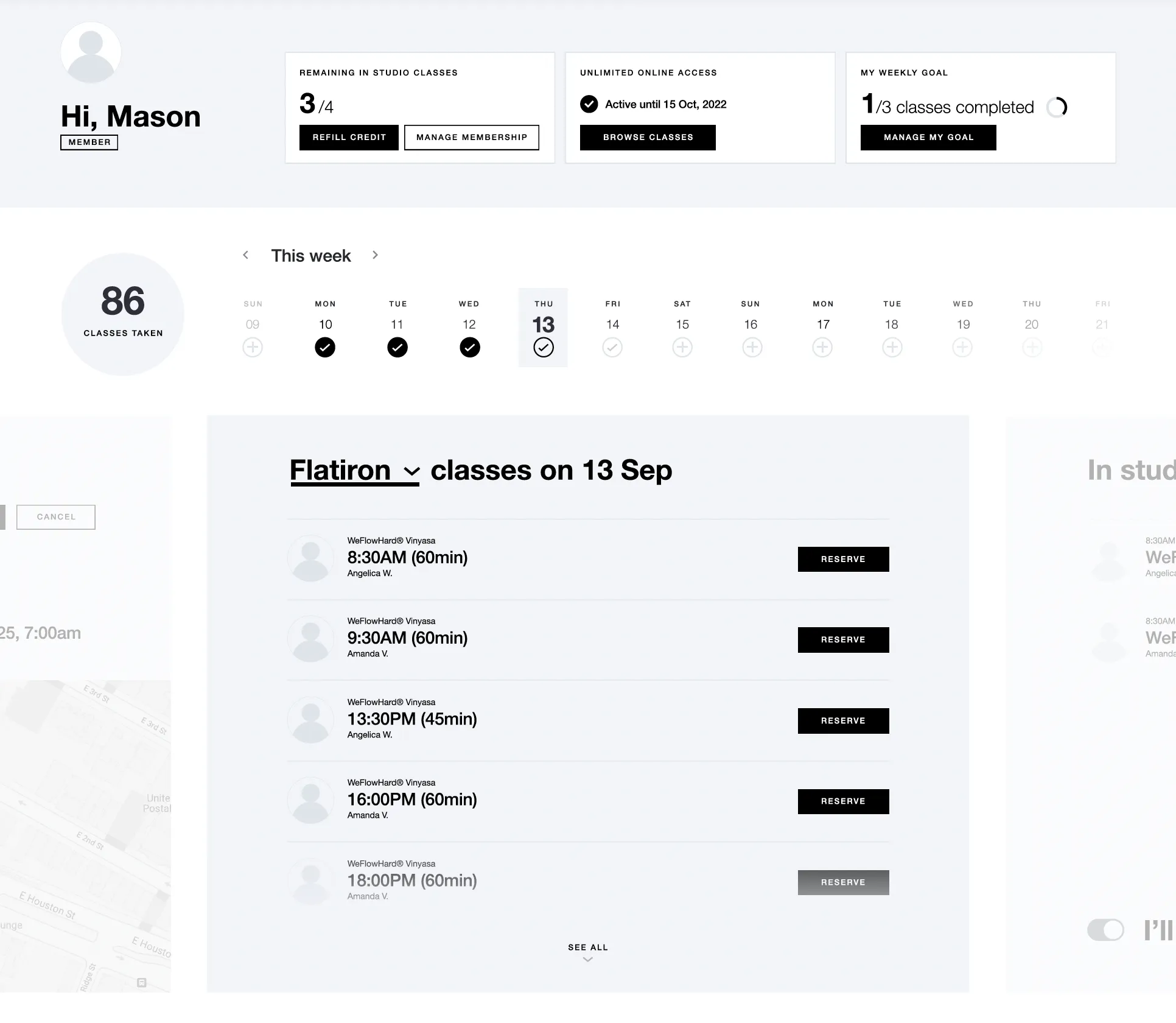
An interactive date picker would quickly surface a one-click booking option for their preferred studio or the ability to view/manage an existing reservation for that day.
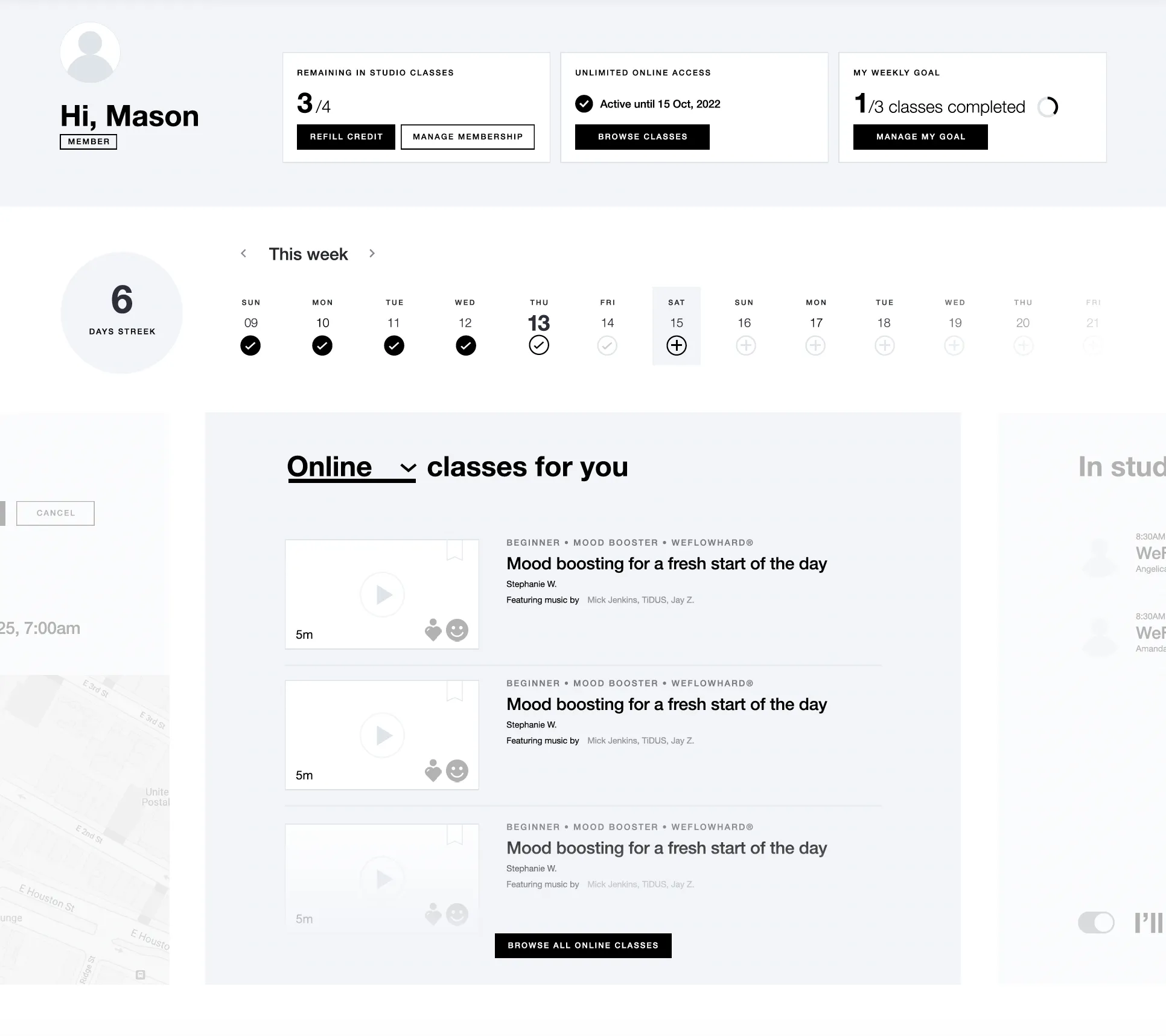
This interface also served as a quick start into digital on-demand classes, which was shown by default for SVOD-only subscribers.